

Think ransomware is your worst nightmare? Think again.
Hackers have discovered a new method to hold your business hostage that may be even more ruthless than encryption. It's called data extortion, and it's changing the rules of cybersecurity.
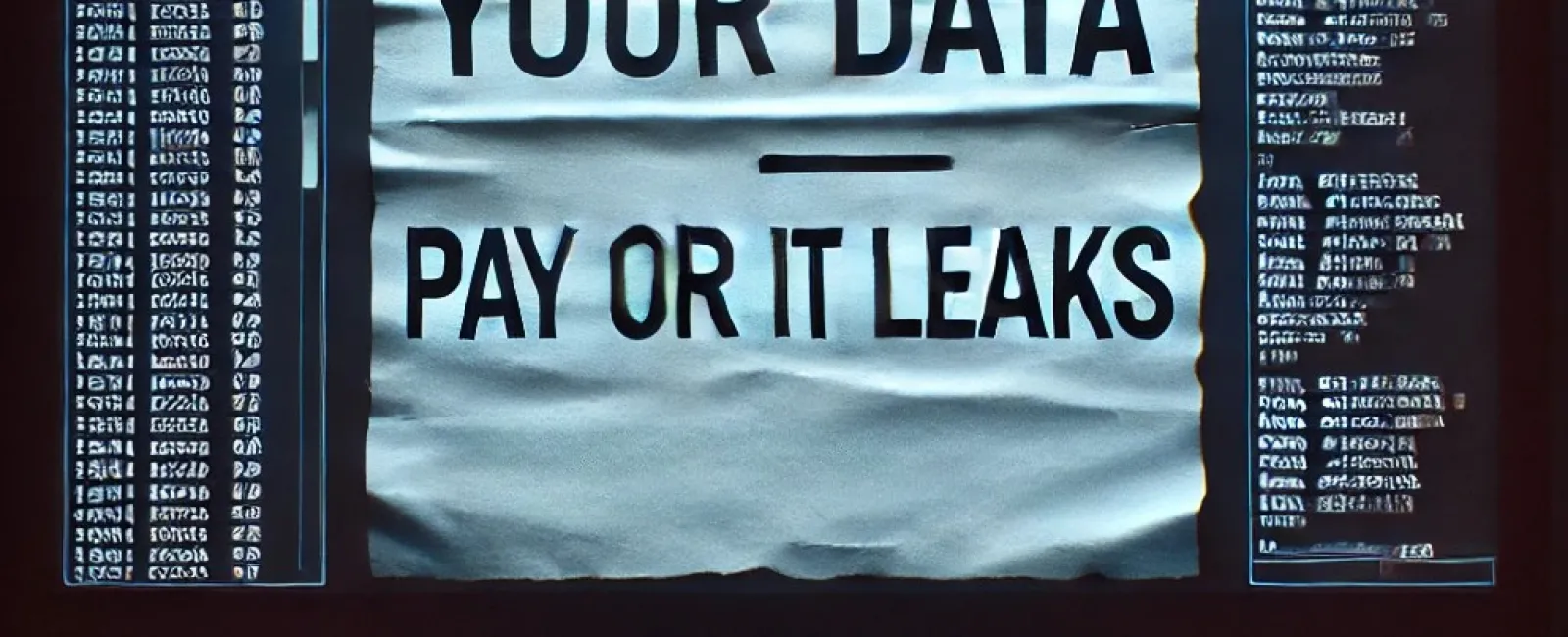
Here's how it works: They no longer encrypt your files. Instead, they steal your sensitive data and threaten to leak it unless you pay. There are no decryption keys and no file restoration—just the fear of your private information being exposed on the dark web and a public data breach.
This tactic is rapidly spreading. In 2024 alone, over 5,400 extortion-based attacks were reported globally, marking an 11% increase from the previous year (Cyberint).
This isn't just ransomware 2.0. It's a new kind of digital hostage crisis.
The Rise Of Data Extortion: No Encryption Necessary
Ransomware used to lock you out of your files, but now hackers bypass encryption entirely. Why? Because data extortion is faster, easier, and more profitable.
Here's the process:
- Data Theft: Hackers infiltrate your network and quietly steal sensitive information such as client data, employee records, financial documents, and intellectual property.
- Extortion Threats: Instead of encrypting files, they threaten to publicly release the stolen data unless you pay.
- No Decryption Needed: Since no encryption is involved, there are no decryption keys to provide, allowing hackers to evade traditional ransomware defenses.
And they're succeeding.
Why Data Extortion Is More Dangerous Than Encryption
When ransomware first appeared, businesses mainly worried about operational disruption. Data extortion raises the stakes significantly.
1. Reputational Damage And Loss Of Trust
Leaked client or employee data means more than lost information—it means lost trust. Your reputation can be destroyed overnight, and rebuilding it may take years, if it's even possible.
2. Regulatory Nightmares
Data breaches often lead to compliance violations, such as GDPR fines, HIPAA penalties, or PCI DSS infractions. When sensitive data goes public, regulators impose heavy fines.
3. Legal Fallout
Leaked data can result in lawsuits from affected clients, employees, or partners. Legal fees can be devastating, especially for small or midsize businesses.
4. Endless Extortion Cycles
Unlike traditional ransomware, where paying restores your files, data extortion has no clear end. Hackers can retain copies of your data and extort you repeatedly over months or years.
Why Are Hackers Ditching Encryption?
Simply put: It's easier and more profitable.
While ransomware attacks are still increasing—with 5,414 reported worldwide in 2024, an 11% rise from the previous year (Cyberint)—data extortion offers:
- Faster Attacks: Encrypting data takes time and resources, but stealing data is quick with modern tools that allow hackers to quietly extract information without triggering alarms.
- Harder To Detect: Traditional ransomware often triggers antivirus and endpoint detection systems. Data theft can blend in with normal network traffic, making it much harder to spot.
- More Pressure On Victims: Threatening to leak sensitive data creates a personal and emotional impact, increasing the chance of payment. No one wants to see their clients' personal details or proprietary information exposed.
No, Traditional Defenses Aren't Enough
Traditional ransomware defenses don't stop data extortion because they focus on preventing encryption, not data theft.
If you rely only on firewalls, antivirus, or basic endpoint protection, you're already behind. Hackers now:
- Use infostealers to harvest login credentials, easing system access.
- Exploit cloud storage vulnerabilities to access and extract sensitive files.
- Disguise data exfiltration as normal network activity, bypassing traditional detection.
AI is accelerating and simplifying these attacks.
How To Protect Your Business From Data Extortion
It's time to rethink your cybersecurity approach. Here's how to stay ahead:
1. Zero Trust Security Model
Treat every device and user as a potential threat. Verify everything without exceptions.
- Implement strict identity and access management (IAM).
- Use multifactor authentication (MFA) on all accounts.
- Continuously monitor and validate devices connecting to your network.
2. Advanced Threat Detection And Data Leak Prevention (DLP)
Basic antivirus won't suffice. Employ advanced AI-driven monitoring tools that can:
- Detect unusual data transfers and unauthorized access in real time.
- Identify and block data exfiltration attempts.
- Monitor cloud environments for suspicious activities.
3. Encrypt Sensitive Data At Rest And In Transit
If stolen data remains encrypted, it's useless to hackers.
- Use end-to-end encryption for all sensitive files.
- Implement secure protocols for data transfer.
4. Regular Backups And Disaster Recovery Planning
Backups won't stop data theft but ensure quick system restoration after an attack.
- Maintain offline backups to protect against ransomware and data destruction.
- Regularly test backups to confirm they work when needed.
5. Security Awareness Training For Employees
Employees are your first defense line. Train them to:
- Recognize phishing and social engineering attempts.
- Report suspicious emails and unauthorized requests.
- Follow strict access and data-sharing policies.
Are You Prepared For The Next Generation Of Cyberattacks?
Data extortion is here to stay and becoming more sophisticated. Hackers have found a new way to pressure businesses into paying ransoms, and traditional defenses are no longer enough.
Don't wait until your data is at risk.
Start with a FREE 15-Minute Discovery Call. Our cybersecurity experts will evaluate your current defenses, identify vulnerabilities and implement proactive measures to protect your sensitive information from data extortion.
Click here or give us a call at 816-256-2595 to schedule your FREE 15-Minute Discovery Call today!
Cyberthreats are evolving. Isn't it time
your cybersecurity strategy evolved too?