

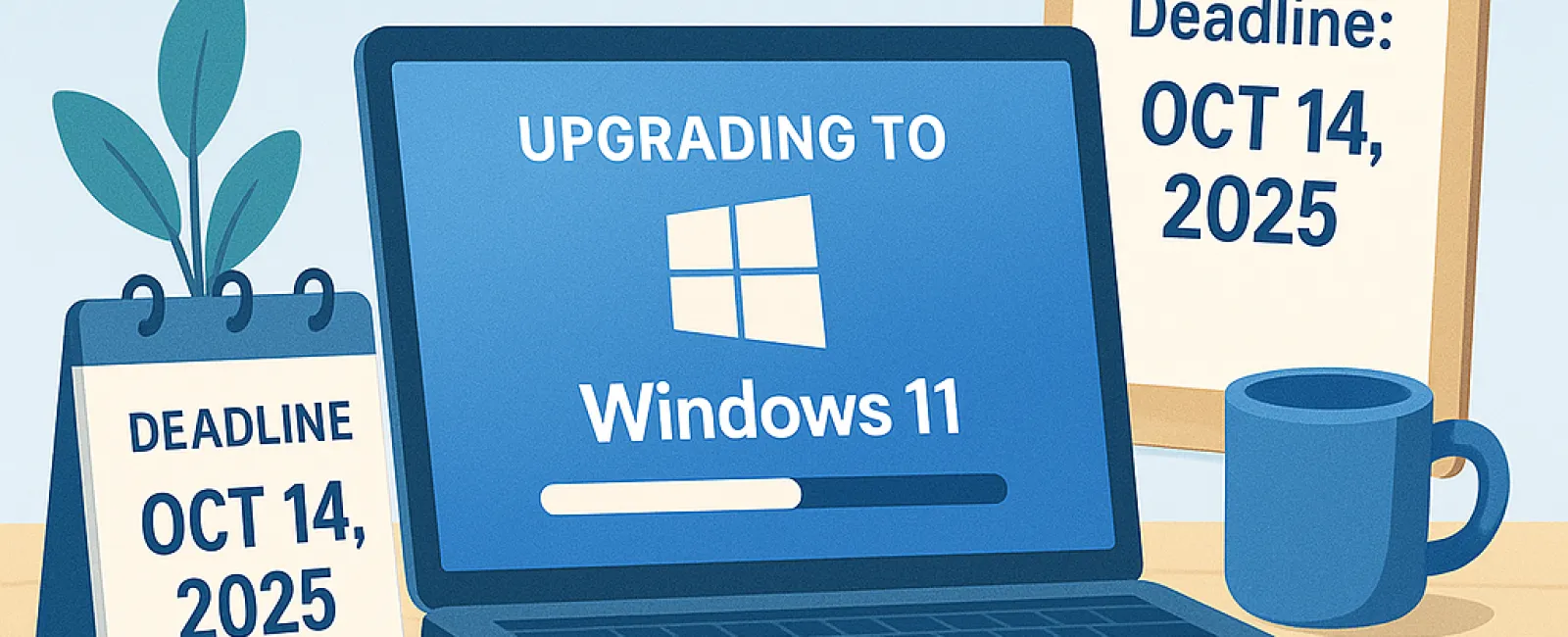
If you're still running Windows 10 on your business machines, let's cut to the chase: The clock is ticking.
On October 14, 2025, Microsoft will officially end support for Windows 10. This means no more security patches, bug fixes, or technical support.
But what business owners really need to understand is that the cost of waiting isn't just about eventually needing to upgrade.
It's about what waiting could cost you right now.
"We'll Deal With It Later" Is An Expensive Strategy
We understand that upgrading every machine in your business isn't exactly a fun budget item. It feels easy to delay—until something breaks.
Here's what procrastination actually costs:
1. You're Operating Without A Safety Net
Once Microsoft stops Windows 10 updates, every new vulnerability becomes your responsibility. Hackers target outdated systems because they're easy to exploit. It's like locking the front door but leaving the windows wide open. One breach could cost you thousands—or worse, your entire business.
2. Software And Hardware Compatibility Issues
Many business applications, such as accounting tools, CRMs, and industry-specific platforms, are already phasing out support for Windows 10. If your systems stop working mid-project or crash during a client demo, what's that worth? It's not just software; new printers, peripherals, and security tools may also stop working with your outdated OS.
3. Lost Productivity
Outdated systems are slower, crash more often, and frustrate your team. Even small delays add up, reducing efficiency, morale, and competitiveness. If every employee loses 10 to 15 minutes a day to tech issues, what does that cost you over a month?
4. Emergency Upgrades Are Always More Expensive
Waiting until your systems crash or your team is locked out doesn't just create stress—it triggers panic spending: emergency hardware orders, rush IT labor fees, and business interruptions while machines are replaced. A little planning now saves a lot of scrambling—and money—later.
5. You're Risking Compliance Violations
If your business handles sensitive data or follows regulations like HIPAA or PCI-DSS, using unsupported systems could lead to fines or lawsuits. Many regulatory frameworks require up-to-date security, and Windows 10 won't meet those standards after October.
What Smart Business Owners Are Doing Now
They're getting ahead of the deadline by not only upgrading devices but also using this transition to:
- Audit which devices need to be replaced
- Streamline tools and software
- Strengthen cybersecurity protections
- Plan IT spending wisely for 2025
How To Make The Transition Smooth
Here's what we recommend:
- Run a compatibility check—Not all machines can run Windows 11. Identify which need replacement.
- Audit your apps—Ensure your essential tools will work on Windows 11 or newer systems.
- Budget for hardware now—Avoid supply chain delays later.
- Partner with an IT provider—We can manage the entire transition with no downtime or surprises.
Don't Wait Until October To Panic
Waiting until the last minute will cost you more—in money, stress, and missed opportunities. We're helping small businesses make the upgrade the smart way: planned, smooth, and optimized for future growth.
Click
here or give us a call at 816-256-2595 to book your FREE 15-Minute Discovery Call and we'll help you identify what
needs upgrading, what can stay and how to build a transition plan that won't
disrupt your business before the deadline.